

I Broke Up with Grades
And found the strange freedom of ungrading

When I was a kid, grades were everything. My identity, self-worth, and ambition were tied to grades. An A was the sweet juicy orange that led me forward.
But now we are broken up.

The love story ended a few years ago. I had an existential crisis. Someone looking on might have called it a meltdown.
A student broke down during an exam, crying.
I had to explain to another student why an 89% was a B, not an A, and that there was no way, this late in the semester, to change that. I had made this argument many times before, and each time, it made less sense to me.
And then I ran into a student at our local pool hall. Months had passed since he took my herpetology class. We are dorks, so we started talking lizards. As one does. We came to one of the topics we had covered extensively, temperature-dependent sex determination. Briefly, in some reptile species, sex is determined by the temperature that they experience during a key time window in development. But the student looked at me blankly. Everything, all the general knowledge and specific examples, were gone, deleted, absent entirely from his brain. It had all washed away.
Something broke in me. I felt like my old friend, my childhood love, had betrayed me.

I tried some disruptions. I graded with colors: one student got a blue, the next a yellow. Students were confused by this. “Is blue better than yellow?” And, the answer: “Of course not. They are colors. Be happy with your blue.” Nobody liked this system.
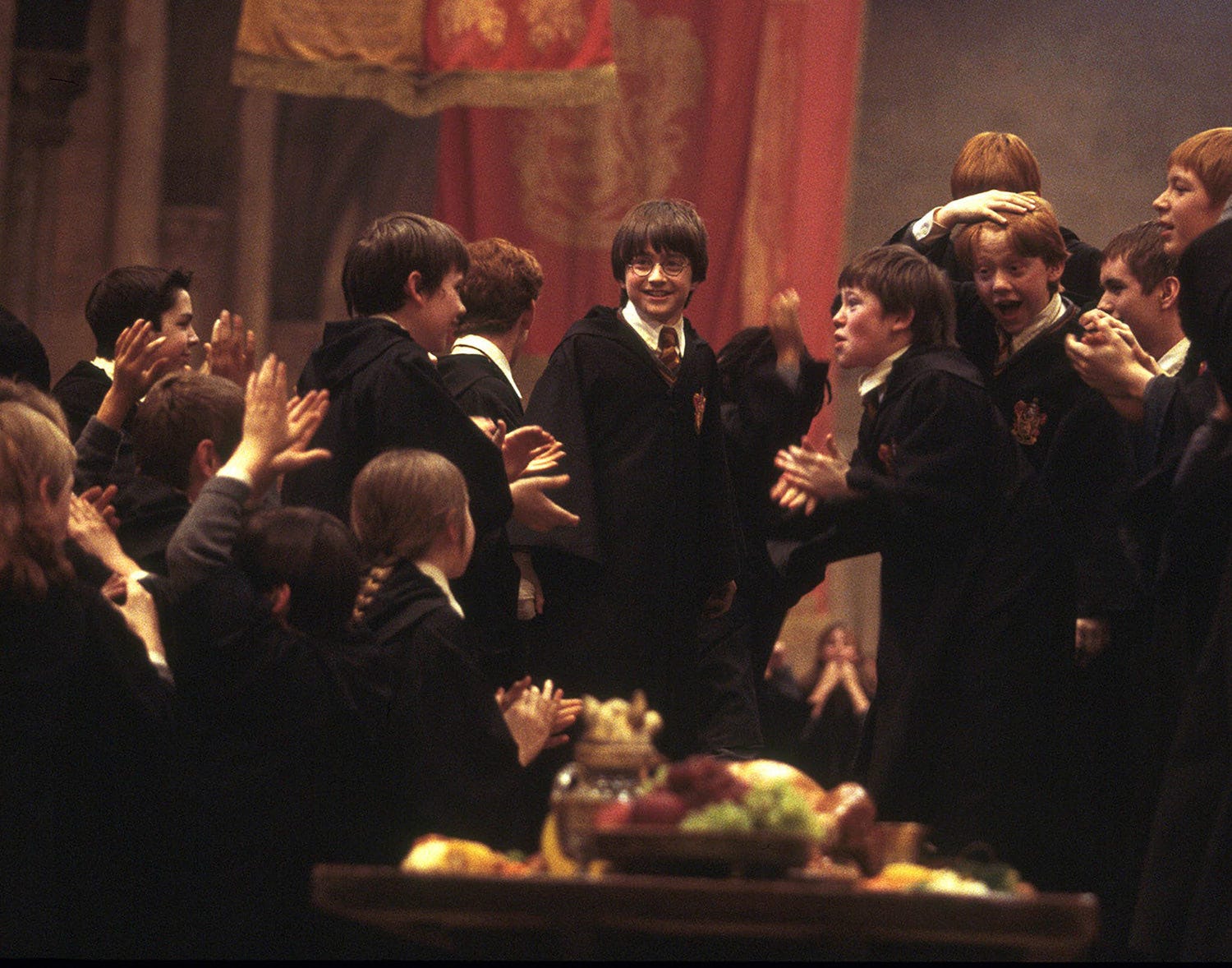
I tried to de-emphasize grades. I mocked them, even, offering students “Harry Potter Points” where a team might get 10,000 points for a single good answer. No one took any of this seriously, and it didn’t really make me feel better. I do think it may have convinced some of my students that at least a few of the last-minute, miraculous Gryffindor victories in the House Cup were undeserved and, in fact, deeply unfair.
But mocking grades was not the same as leaving them.
So I broke up with grades, at least as they are traditionally understood. Once that process was well underway, I learned that it was a whole movement, called Ungrading, which I now happily embrace. I don’t think this system is for everyone. But I think telling my story might be helpful or informative for some.
With that in mind, you might ask: What is wrong with the current system?
First, grades collapse a complex multifaceted description of a student into a single, artificially discretized axis—and that is no good.
I am a quantitative biologist. I measure things, then analyze those measurements using statistics. I might, for example, take a set of measurements on geckos. We might measure hundreds of geckos covering dozens of species. We then analyze those measurements, using them to understand how these geckos diversified over time, and what forces have led them to be how they are today.
I want you to imagine a hypothetical research proposal I might make for my geckos. Instead of my current, multivariate, descriptive approach, I will just measure each gecko in one way. I will call that measurement an “examination.” I will score each examination as a percentage, from 0 to 100. Once I have three or four examinations, I will find the average. Instead of using this number directly, though, I will divide the geckos into five bins, from high to low. I will then tell you the bin where every lizard falls.


Would you use a grade like that to try to figure out where the gecko might be placed in its habitat? Any gecko specialist they would laugh you out of the room. But this is what we routinely do to students in our current grading system.
To put a finer point on it: imagine one student is really good at multiple choice questions. She has mastered the art of the educated guess. Another student, more cautious, often overthinks multiple choice questions. They do better at essay questions. Just by changing the point values you assign on your exam, you can re-rank these students, favoring one over the other. And the decisions you use to assign points are entirely arbitrary. Does this make any sense?
But what about full transcripts? After all, students get a suite of grades, grades from multiple classes and through time. Doesn’t this provide a more nuanced picture? But the grades have a problem. As we say in statistics, this is a prime example of pseudoreplication. The grade that a student gets in one class is highly predictive of the grade that student will get in another, or in upcoming years. We are measuring the same thing, over and over; we artificially discretize that information; and then we pretend that this is somehow the whole picture of a student’s performance in school.
You should not do this to geckos, and certainly not to students. Because grades only measure one nonsensical thing.
Imagine a hypothetical student with an extremely short memory. The student is really good at regurgitating what you tell him. But he has no memory, no retention at all. You can ask him to memorize material the night before an exam, and he will do that. You can require him to spit your own definitions back to you, word for word, on an exam. But none of that information gets retained. His mind is like an elaborate sand castle on the beach, swept away by the next tide.
We all say we want students who can think for themselves. We want long-term learning. But the system we all use, with its PowerPoints and exams, rewards the ephemeral and the regurgitated.
This is all coming to a head this decade in the age of AI. The problem is that we teach our students to act like LLMs, and then complain when LLMs cause havoc in our classrooms.
Some professors like to play a guessing game with their students. They ask a question, but they don’t want the student to answer the question. Instead, they want the student to guess the answer that they want to hear, and then feed that answer back to them. This is not asking for learning—it is asking for regurgitation.
Some ways of teaching have a lot in common with the process of training a large language model (an LLM like ChatGPT). In broad strokes, many AI models learn to say exactly what we most want them to say. They can weave a web of bullshit that is beyond belief. And now all of our students have access to these models on their phone. It is a much easier way for them to play “guess what the professor is thinking.” This sort of problem is one that might lead a professor to ban the use of AI in the classroom. But this is like covering yourself in honey and then banning bears.

And, needless to say, grading is a tremendous, soul-sucking pain in the ass.
OK, fine. Maybe you are nodding along to my rant. But what can we do instead?
I started slowly. I was tired, and bored, and frustrated, and grading with colors.
For a while, I did away with grading in our class entirely. I did not even mention it. I just sort of took note of who participated and who did not. There was a spreadsheet, and I recorded who did what when. If a student seemed to be checked out, I talked to them. This was overall kind of a disaster. Students on both extremes got the most upset. I did fail the completely disengaged, and they were surprised—”what the hell how did I fail this class with no grades.” Conversely, hardworking students got no higher of a grade than a student who coasted through the semester. They were upset that their orange was not more juicy than the orange of their slacker friends.
So, that didn’t work.
Now the system I use is more like contract grading. Students have a set of tasks that have to be done. With each task, they are given a set amount of points for completion. A lot of this is group work, done in class. Students work together in a short, intense burst, learning from one another to complete a task. They might, for example, draw a cartoon about turtle evolution, or write a newspaper article on frog calls; students might have to make a two-minute explainer video about how plants breathe.
When these projects are turned in, students get full credit. They also get feedback. It is important for students to know when they are right or wrong, especially in a science course. Many of the projects also involve extensive feedback and discussion with other students. But none of this feedback is associated with the grade.
Then at the end of the semester we add up all the points and, per university requirements, assign a grade. It is pretty easy for students to get a high grade—most, but not all, do.
As professors, our lives are a lot easier. But the results go deeper than that. Ungrading changes what students think school is for.
The guessing game is broken. Students are not trying to regurgitate or tell us what they think we want to hear. Instead, they express themselves. I now know when students are artists, musicians, philosophers, or masters of social media. I can see it clearly in their work. Often students will take a wild risk, turning in work that is beyond what was assigned. There is no fear of a bad grade to stop them. Once, for example, a group of students recorded an entire assignment in a made-up—and completely untranslated—alien language.
You might wonder about attendance. Yes, I do see attrition in student attendance through the semester, but not any worse than in the heart of our traditional grading days. And the students who attend regularly do so because they want to be there. I love coming to class late in the semester and looking out at an eager and interested audience. And the class is especially well-loved by our neurodiverse students, who are poorly served by the traditional system.
I often hear faculty complaining about poor quality students. Many of these professors are very experienced, having taught for decades, but they seem to find little joy in the classroom. I feel sorry for them, but I think the system has trained them to look for the wrong things. I don’t see inadequacy in my classroom: I see my ungraded students as complex, many-sided humans. I feel lucky to spend time with them.
I am glad to have ended my love affair with grades. I am still experimenting, and these experiments sometimes make me remember what I came here to do.
I once had students mock up a children’s book, which they turned in one day in February. Later that semester, in early May, I saw a student drawing on an iPad before class, a cartoonish pterosaur, an extinct flying reptile. This, they informed me, was the finished product, a full children’s book that the group had completed on their own.
Not for the points. There were no points left to earn.
They wanted to finish the thing they had made.
I'm so glad you're still teaching, you were indeed our favorite class because of your enthusiasm. Dually, the green anole from class, lived several years with me. I loved watching him run on two legs!
I recently listened to a very boring hour-long seminar about ungrading that left me with no actual ideas. This is both full of ideas and very far from boring! Thank you Luke!